


Jaw And Body Connection
✓ Learn how the jaw affects posture and movement.
✓ Understand the connection between clenching, neck tension, and body compensation.
✓ Identify jaw patterns that may influence the spine and pelvis.
✓ Use simple exercises to support better jaw and body alignment.
✓ Instant access + lifetime updates as we discover new techniques
Get CoursePack Bundle
 Course Pack (Jaw & Body FREE)
€999,00
Jaw & Body Connection Included FREE (€249 Value)
Get all 6 courses covering jaw, feet, eyes, reflexes, brain, and posture. Lifetime access included.
Jaw and Body Connection
Why does your hip keep tightening on the same side?
Your jaw, neck and pelvis can influence how your body holds tension.
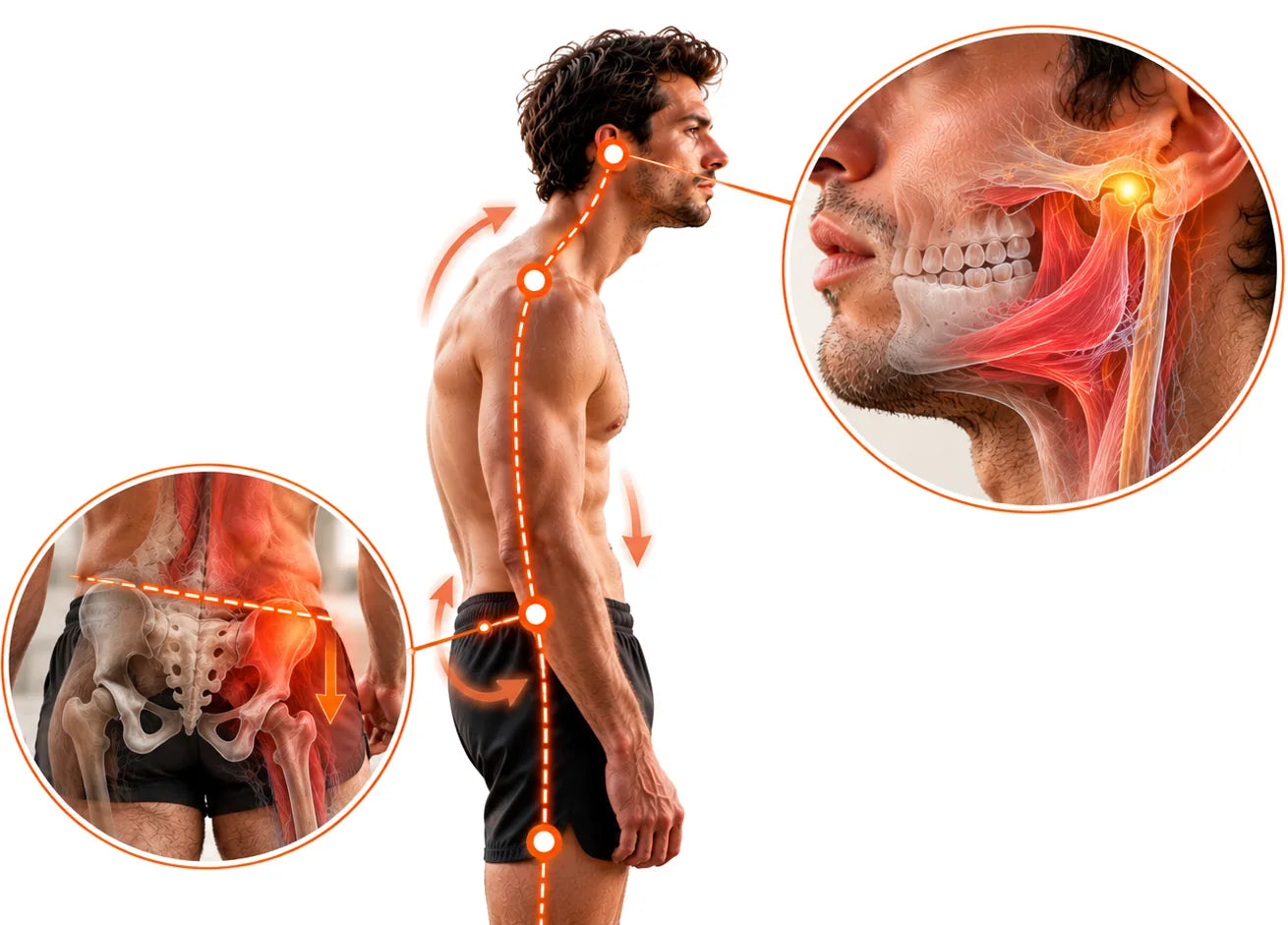
-
Jaw position
Jaw alignment and tongue posture can influence neck tension and postural patterns.
-
Hip compensation
Changes in jaw and neck position can contribute to uneven pelvic alignment and hip tension.
The jaw driven pattern no hip exercise can fix

Every practitioner you have seen has gone straight to the hip. Release it, adjust it, stretch it, strengthen the glute on that side. It works for about 2 weeks. Then the same tightness returns in the same spot.
The hip is not generating the pattern. It is responding to one.
Your jaw position determines how your cervical spine sits. C1 the top vertebra acts as a relay between the jaw and the pelvis. When the jaw is shifted even by millimeters C1 compensates. The pelvis follows. One hip tightens, the other drops, and the SI joint on one side starts taking load it was never designed to handle.

This is not theory. Stand up right now. Shift your jaw to the right. Notice which hip responds. Shift left. The pelvis follows the jaw immediately without you doing anything below your neck.
This connection runs every minute of every day. No amount of hip work changes it because the hip is not the source.
What the course covers
The Jaw and Body Connection course walks you through a full jaw pelvis assessment. You identify which side of your jaw is driving the pattern, test the C1 relay in under 60 seconds, and learn the correction sequence that addresses the jaw first so the hip stops being told to tighten.
Lifetime access. All future updates included. 0% financing available over 6 months.
What’s inside the
Jaw and Body Course
A step by step system to improve your jaw function, head position and whole body alignment.
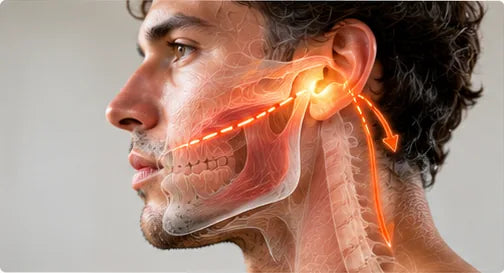
Module 1
Tongue posture
and head positionLearn how your tongue position and head alignment work together to support proper jaw function and balanced posture.
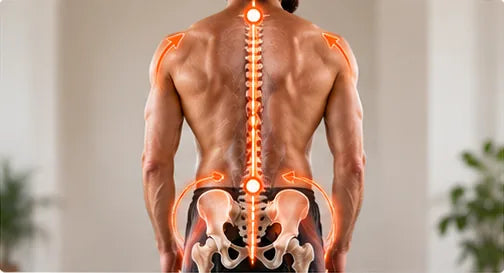
Module 2
Head position
and pelvisDiscover how your head position influences your pelvis and how these two areas work together to control your overall alignment.
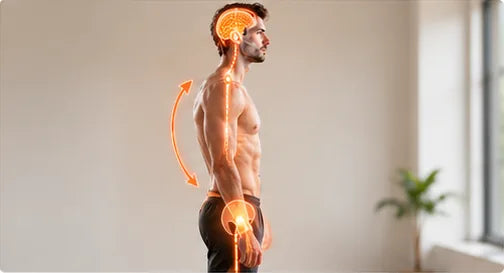
Module 3
Integrating it all
Bring it all together with practical strategies to improve jaw function, head position and body alignment for lasting change.
How Jaw and Body Connection Can Help
The Jaw and Body Connection program explains how jaw position influences spinal organization and pelvic mechanics. By identifying the upstream driver and correcting the information at the jaw, the body can reorganize alignment naturally instead of constantly compensating below.
-
Identify the Jaw Driven Pattern
The program shows how small shifts at the jaw influence how the head balances, how the spine stacks, and how the pelvis organizes underneath it. Understanding this top down driver explains why recurring tension keeps appearing in the same areas even when mobility and strength look adequate.
-
Understand Why Compensation Keeps Returning
When the body senses instability it creates compensation patterns to stay upright. These show up as uneven loading, recurring tightness, and symptoms that move around the body. The Jaw and Body Connection explains why treating the hips, pelvis, or back alone rarely resolves the pattern.
-
Correct the Information That Drives Alignment
Once the jaw driven information changes, the spine and pelvis can reorganize without forcing positions or chasing symptoms. The program teaches how to apply the correction sequence so the body no longer needs to compensate.
Frequently Asked Questions
Can jaw alignment improve anterior pelvic tilt?
Yes. Jaw position influences how the head balances, which changes spinal stacking and pelvic organization.
Can TMJ cause forward head posture?
Yes. Jaw driven compensation shifts head position and creates chronic neck and upper back strain.
Does jaw posture affect the entire spine and pelvis?
Yes. Changes at the jaw alter spinal loading and pelvic orientation throughout the body.
Will this help with jaw clenching and bruxism?
Many clenching patterns resolve as stability improves and compensation is no longer required.
How quickly will I see posture changes?
Changes often happen quickly because the body responds immediately to corrected information.
Can poor jaw posture cause neck tension and headaches?
Yes. Neck tension and headaches commonly arise from jaw driven compensation patterns.
Jaw And Body Connection
Jaw and Body Connection shows you how to identify jaw driven posture patterns and how to change them so your body can reorganize itself naturally.
Get CoursePack Bundle
Course Pack (Jaw & Body FREE)
€999,00Jaw & Body Connection Included FREE (€249 Value)
Get all 6 courses covering jaw, feet, eyes, reflexes, brain, and posture. Lifetime access included.
What students say about the program
Customer Reviews
- Reviews
- Questions
 United Kingdom

Great content
I really enjoyed the course Great information about newborns/latching reflex and how early breastfeeding affects the formation of teeth.