


In this article
- What mewing actually is
- Why getting it right matters
- Step-by-step mewing for beginners
- Mistakes beginners often make
- Mewing and nasal breathing
- How mewing ties into posture
- An easy daily routine
- Why progress stalls after a few weeks
- Mewing devices and tongue posture devices
- Will mewing change your face?
- Quick beginner checklist
- Common questions
Your mouth posture can influence how your face, jaw, neck and breathing feel throughout the day, often without you realising it. Perhaps your lips part when you concentrate. Perhaps your jaw aches after a long stretch at the computer. Perhaps your head creeps forwards while you work. Then mewing crops up online, and you start to wonder whether changing where your tongue sits could make a difference.
Learning how to mew properly has nothing to do with forcing the jaw into a new shape or watching the mirror for quick results. At heart, it is a small tongue posture habit: the tongue rests lightly against the roof of the mouth, the lips stay gently together, the teeth stay unclenched, and you breathe through the nose whenever that feels easy.
Beginners need to hear this, because the usual instinct is to overdo it. People shove the tongue upwards, bite down, stiffen the face and finish with a sore jaw rather than better posture. Done well, mewing feels relaxed and natural, never rigid or painful.
This mewing tutorial takes you through how to mew in a clear, safe way that suits beginners. You will find out what mewing involves, where to place the tongue, which mistakes to steer clear of, and how the position of your tongue relates to the rest of your body.
In a nutshell
Tongue resting up, lips together, teeth apart, jaw soft. Let the entire tongue settle lightly against the palate and breathe through your nose when that is comfortable. Think of mewing as a way of resting, not a test of strength: a strained jaw or face simply means you are trying too hard.
To understand the mechanism behind tongue posture and its effect on the body, read our guide to proper tongue posture.
What Is Mewing, Exactly?
Mewing means letting the tongue rest against the roof of the mouth, with the lips closed and the breath coming through the nose. It took off online because people linked it with the look of the jawline, facial posture and healthier breathing habits.
The concept is straightforward, yet the finer points count. Mewing properly is not about pressing hard with the tongue, nor about clamping the jaw shut, nor about holding an awkward facial expression from morning to night. It is about giving the mouth a better position to rest in.
In the correct mewing tongue position, the tongue lies wide and soft along the palate. The lips meet without effort, the teeth are not squeezed together, the jaw stays loose and, where possible, breathing is quiet and through the nose.
It helps to compare mewing with standing well. Good posture when standing is balanced rather than rigid, and good tongue posture works the same way: supported, never forced.
Read more: exercises to strengthen the tongue and soft palate (free e-book included with the Posturepro+ subscription).
Why Learning to Mew Properly Matters
A lot of beginners look up how to mew properly because they are after a sharper jawline or a stronger side profile. That may be the starting point, but the tongue's role goes well beyond looks. It influences how the mouth rests, how comfortable the jaw feels, where the head sits and how you breathe from hour to hour.
If the tongue lies low in the mouth, the lips tend to part more often, the jaw can drop slightly, the head may drift forwards and breathing can switch from the nose to the mouth. Repeated day after day, these small shifts can settle in as your body's usual pattern.
Mewing properly makes these patterns easier to spot. You begin to catch the moments when your mouth is open, your jaw is clenched, your tongue has dropped or your head has crept forwards. That awareness is valuable, because posture tends to change through repetition rather than force.
It is best to treat mewing as a gentle posture habit. It can encourage better oral posture, but it is no guarantee of a reshaped face, particularly for adults, whose facial bones do not readily change through tongue posture on its own. Even so, better tongue placement helps many people become more aware of their jaw, their breathing and their posture.
How to Mew Properly: A Step-by-Step Guide for Beginners
Good mewing starts with the whole body rather than the tongue alone. Before placing the tongue, check how you are sitting or standing. Lengthen upwards without going rigid, let your shoulders drop, and keep your head stacked over your neck instead of jutting forwards. Aim for a level chin, neither tipped up nor pulled in hard.
With your head and neck settled, bring your lips together lightly. There is no need to press them; they should simply meet, the way they do when your face is at rest.
Then let the teeth unclench. Beginners often overlook this, yet it is one of the most important details. The teeth do not have to touch while you mew. Plenty of people build jaw tension because they assume mewing means biting down, and it does not. Leave a small gap between the teeth and keep the jaw slack.
Next, lift the tongue to the palate. The tip belongs just behind the upper front teeth, resting there rather than pushing against them. The middle and back of the tongue rise as well, so that the tongue meets the roof of the mouth along its full width.
An easy way to find this spot is to say "sing" and hold the "ng" at the end. You may notice the back of the tongue lift on its own. That raised position is close to what you are looking for; once you have found it, let go of any effort. You are after gentle, even contact, not a firm squeeze.
Last of all, breathe through your nose if that is comfortable. Nasal breathing belongs to good mewing, but it should never become a battle. If your nose is blocked, leave it. The position ought to feel restful.
What the Tongue Should Feel Like
While you practise, the tongue should feel broad, soft and supported. It should not be jammed hard into the palate, nor pushing against the front teeth, nor causing strain in the jaw, throat or neck.
Picture the tongue lying across the roof of the mouth like a blanket: raised, yet relaxed. Every part of it takes part, not just the tip.
Many beginners raise only the front of the tongue. That is understandable, but it is only half the position. The back of the tongue completes the resting posture, and the "ng" sound is a handy way to locate it. Find the position for a few seconds, then let any surplus effort go.
A tongue that tires quickly is usually working too hard. Begin with brief practice sessions rather than attempting to hold the position from morning to night. Several relaxed reminders spread across the day beat one long, tense stretch.
Where the Jaw and Teeth Belong
Keep the jaw relaxed while you mew. It is easy to miss this, because many online clips make mewing look strenuous. Doing it properly needs no tight jaw, no clenched teeth and no fierce expression.
In most cases the teeth should sit slightly apart. That small gap eases the load on the jaw joints and the chewing muscles. If you catch your back teeth pressing together, stop, let the jaw soften, and then bring the tongue back up.

Let the lips rest closed without force. If keeping them together is hard, do not push it. Habits, breathing patterns or the structure of the face can make lip closure difficult for some people, and in that case gentle awareness matters more than effort.
For beginners, one short phrase sums it up: tongue resting up, lips together, teeth apart, jaw soft. It covers everything about mewing properly without overcomplicating it.
Mistakes Beginners Often Make
The most frequent mistake is pressing the tongue up too firmly. It is tempting to believe extra pressure brings faster results, but it does not. Mewing is a way of resting, not a test of strength, and constantly pressing the tongue to the roof of the mouth can build tension in the jaw, teeth, face and neck.
A second mistake is driving the tongue into the front teeth. The tip should sit just behind the upper front teeth, never shoving against them. Steady pressure on the teeth is not the aim and can lead to discomfort.
Clenching causes problems too. Some beginners bite down while they mew and end up with an aching jaw. If your jaw feels tired after a session, ask yourself whether your teeth were touching or your face was tight.
Another error is overlooking head posture. With the head pushed forwards, the tongue can feel squashed and the jaw less at ease. Mewing works better when the head, neck and spine are well balanced.
And many beginners expect rapid results. Mewing is not a quick makeover; it is a posture habit that responds best to gentle, consistent practice.
Mewing and Breathing Through the Nose
Breathing through the nose and mewing tend to go together, because the tongue settles more easily against the palate when the lips are closed and the nose handles the airflow. When the mouth hangs open a lot, the tongue tends to sink.
To practise, let the tongue rest lightly against the roof of the mouth, close your lips gently, unclench your teeth and breathe slowly through your nose. Each breath should be soft and unforced. Avoid sniffing air in hard or straining in any way.
If your nose feels blocked, stop for now. A cold, hay fever, sinus trouble or a narrow airway can all make nasal breathing hard, and forcing the position will not help. Mewing should suit your body rather than fight it.
With time, a gentle awareness of how you breathe may help you notice when your mouth drops open at work, in front of a screen, during exercise or as you wind down for bed. That awareness can feed into better everyday habits.
How Mewing Ties Into Your Posture
Where the tongue rests is linked to how the whole body holds itself. The mouth, jaw, neck, spine, hips and feet function as one connected system. If the head drifts forwards, the jaw position tends to shift. If the shoulders round, the neck muscles can tighten, and a tight neck can leave the tongue and jaw less at ease.
That is why mewing works best as part of the bigger picture rather than on its own. Hours spent with the head pushed forwards and the shoulders hunched make it harder for the tongue to settle. Sort out your base before your tongue: sit up, bring your head back over your body, let the shoulders drop, and only then lift the tongue.
At Posturepro, we see the body as a connected chain, where a shift in one area can affect another. Better tongue posture can sharpen your awareness, yet the posture of the whole body counts as well. The aim is not to micromanage every muscle, but to build better alignment with less strain.
The jaw is a link in the chain
Mewing deals with one link in that chain: where the tongue sits. If you want to see how the jaw connects with everything else, the Jaw and Body Connection course looks at how jaw position and tongue function relate to your neck, spine and posture, and shows you how to check for a jaw imbalance on your own.
How Often Should You Practise as a Beginner?
There is no need to mew all day from the outset. Trying to hold the position non-stop usually leads to fatigue, so short, easy moments of practice work better.
Start with a handful of quick checks through the day: perhaps one after brushing your teeth, one at your desk, one on a walk and one before bed. Each check takes just a few seconds.
Each time, ask: are my lips together, are my teeth unclenched, is my tongue resting up, and is my breathing calm? Then carry on with what you were doing.
Mewing gets easier with repetition. You do not have to force anything; you simply come back to the position whenever you notice your mouth posture has slipped.
An Easy Daily Mewing Routine
First thing in the morning, sit up straight before you reach for your phone. Bring the lips together lightly, unclench the teeth, rest the tongue against the palate and take a few quiet breaths through your nose. It is a simple cue to start the day.
While you work or study, keep an eye on where your head is. Most of us lean in towards screens without realising. Draw the head back over the shoulders, soften the jaw and settle the tongue again. This small adjustment helps mewing feel more natural.
In the evening, treat mewing as a calm posture reset rather than a demanding exercise. Relax your face, let your tongue rest up if that is comfortable, breathe through your nose if you can, and release any tightness in the jaw before you go to bed.
The routine is deliberately simple. The easier a habit feels, the more likely it is to stick.
Why Progress Stalls After the First Few Weeks
Most people who learn to mew properly notice a genuine difference within the first few weeks. The jaw feels steadier, the lips close more easily and nasal breathing no longer feels like hard work.
After that, progress tends to slow down.
There is a straightforward explanation. Conscious mewing lasts only as long as you are thinking about it. Your brain holds a default tongue position, built up over years of habit, and the body slips back to it as soon as your focus moves on. A few minutes of deliberate practice each day cannot overwrite a pattern the brain has kept for years.
This is the natural limit of conscious practice. It has nothing to do with willpower; it is the distance between the position you can hold when you concentrate and the default your brain falls back on when you do not.
At this point, many beginners start asking what to do next.
Mewing Devices and Tongue Posture Devices: What Is Worth Knowing
Because conscious mewing reaches a plateau, plenty of people go looking for a mewing device or tongue posture device to keep the position in place for them. That makes sense as a next step, but the options are confusing. Some products are designed for night-time wear. Some are rigid trainers that push the jaw into place. Others are chewing aids that strengthen muscles without changing how the tongue rests. They differ, and they address different problems.
What holds conscious mewing back is not weak muscles but the default position the brain returns to whenever your attention drifts. A device is only useful if it trains that default while you are awake and alert, since that is when the brain learns. Something worn only at night cannot teach a daytime default, and anything that forces the jaw hard tends to cause the very tension that limits mewing to begin with.
When weighing up any tongue posture corrector or mewing mouth guard, three questions matter. Does it train the daytime default or only the night-time one? Does it support the position gently or force it? Does it take head and neck posture into account or ignore it? Only a device that gets all three right will shift the position you cannot hold by yourself.
Swallowing While You Mew
Swallowing should come naturally. Beginners sometimes overanalyse it and turn each swallow into a strained manoeuvre, but mewing properly should not make swallowing feel odd or effortful.
To practise, let the tongue rest lightly on the palate, keep the lips gently closed and the jaw loose, then swallow without pushing the tongue into the front teeth or clamping the lips.
A good swallow needs no big facial movement. If your lips tense or your chin muscles bunch up, slow down and start again, keeping the movement small.
There is no need to get every swallow perfect. Focus on gentle awareness, and over time your mouth posture may start to feel better coordinated.
Signs You Are Pressing Too Hard
Mewing should never hurt. An aching jaw, pressure on the teeth, a headache or a stiff neck usually means you are trying too hard.
Other warning signs include discomfort around the ears, a sore face, a tired tongue, a clicking jaw or the sense that you have to hold your face in position. None of these means the practice is working better; each one is a cue to stop and reset.
Good mewing feels light and easy to keep up. You should still be able to breathe, talk, swallow and relax as normal. If holding the position feels like a battle, ease off.
Will Mewing Change the Shape of Your Face?
This question comes up more than almost any other: can mewing properly alter the jawline or the shape of the face?
The honest answer is that mewing is better seen as a posture habit than as a guaranteed way to remodel the face. In children and teenagers who are still growing, oral posture, breathing habits and jaw development may be linked. In adults, significant changes to bone are far less likely without professional treatment.
That is not to say mewing is pointless. It can sharpen your awareness of tongue posture, mouth breathing, jaw tension and head position, help some people hold the face and neck in better balance, and encourage a more relaxed resting position for the mouth.
Still, it should never be sold as a promise of dramatic facial change. Before-and-after photos online are shaped by lighting, camera angle, weight change, expression and posture. The real reason to learn to mew properly is to build a healthier posture habit, not to chase results that are out of reach.
Mewing Without the Tension
The simplest way to cut tension is to use less effort than you think you need. Lift the tongue lightly, relax the jaw, leave the teeth apart, let the lips close gently and breathe as usual.
It can also help to reset the neck first. Roll the shoulders once or twice and let them settle, lengthen the back of the neck slightly and keep your gaze level. With the head balanced, the tongue often finds its place more easily.
Mewing is not something to perform. It is a way of resting, so if it feels like hard work, dial the effort down.
When to Take Extra Care With Mewing
Some people need to take more care. If you have jaw pain, toothache, a bite that is changing, regular headaches, a jaw that clicks or locks, changes in your speech or difficulty breathing through your nose, do not force mewing.
Advice about mewing online is generic. It cannot take into account your bite, your airway, your jaw joints, your dental history or your posture pattern. Gentle awareness is usually a different matter from forceful practice, but pain or discomfort always deserves attention.
Mewing should feel comfortable. If it does not, stop and get individual advice from a qualified practitioner.
Quick Beginner Checklist for Mewing
Here is the checklist in brief. Sit or stand tall. Keep your head balanced above your shoulders. Bring your lips together lightly. Leave a small gap between your teeth. Rest your tongue against the roof of your mouth, wide and soft. Keep it away from the front teeth. Use your nose for breathing if that feels easy. Keep your jaw loose. Stop if anything hurts.
That is how to mew properly, boiled down to the essentials.
In Summary
Mewing properly is simple, but it calls for care. It is not about shoving the tongue upwards or trying to transform your face overnight; it is about giving your mouth a better position to rest in.
If your tongue lies lightly against the palate, your lips close softly, your teeth stay apart and your breathing is calm, you have the right idea. If your jaw tightens or your face begins to strain, you are overdoing it.
Begin with small reminders, keep your posture balanced and give the habit time to grow. Good tongue posture should feel steady, natural and easy to come back to throughout the day.
Jaw and Body Connection
Discover How Your Jaw Influences Your Posture, Balance, and Movement.
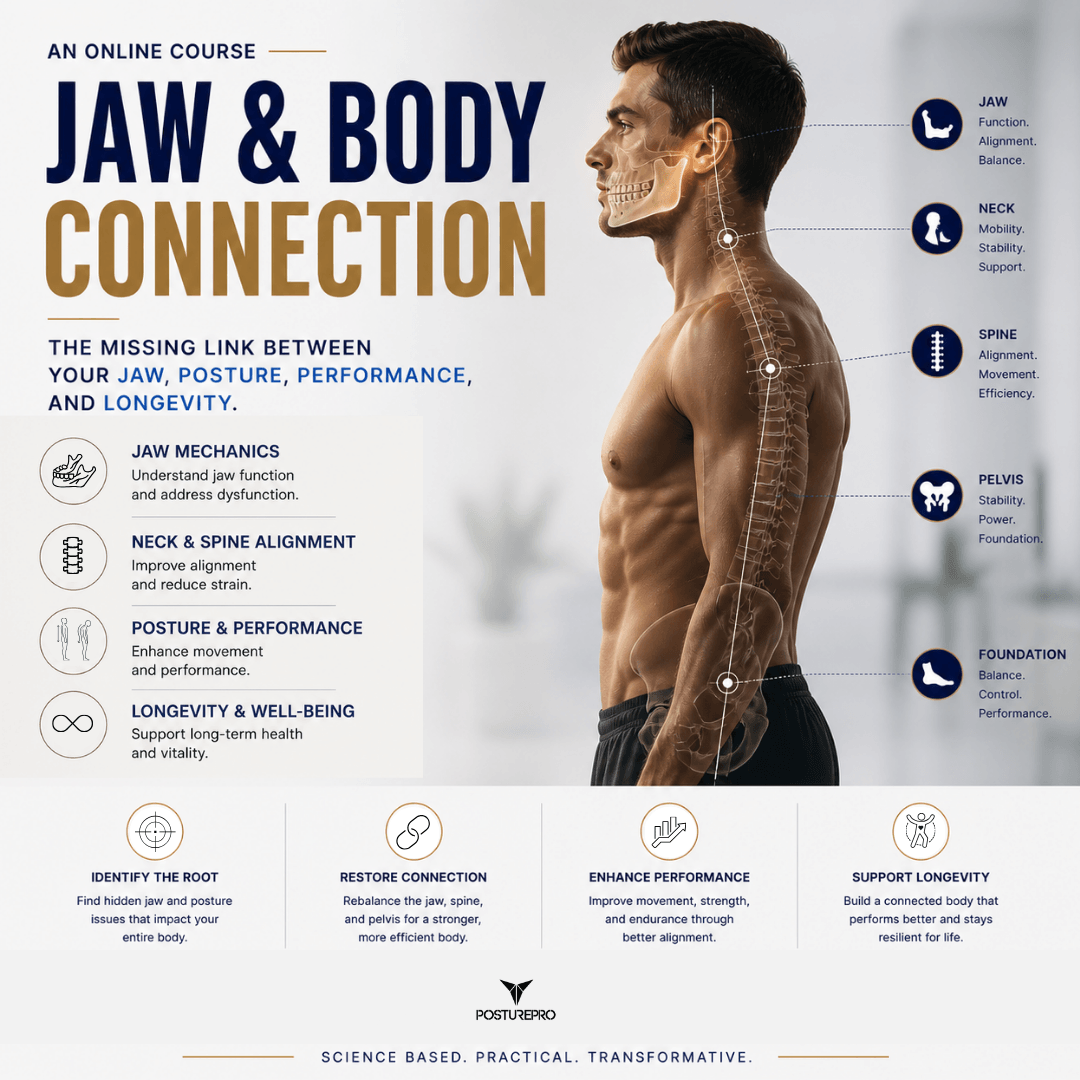
- ✓ Understand how jaw position, tongue function, and muscle tension can influence posture and body alignment.
- ✓ Explore the neurological connections between your jaw, neck, spine, and nervous system.
- ✓ Learn practical assessments and techniques to identify jaw imbalances and understand their influence on the rest of your body.
Common Questions About Mewing
What is the right way to mew?
Mewing properly means resting the whole tongue lightly against the roof of the mouth, keeping the lips gently closed and the teeth slightly apart, letting the jaw relax, and breathing through the nose when that is comfortable.
Should my teeth be touching when I mew?
No. In most cases the teeth sit slightly apart. Clenching has no place in proper mewing.
What is the correct tongue placement for mewing?
The whole tongue rests broadly against the roof of the mouth, with the tip just behind the upper front teeth and not pressing into them.
Why does my tongue feel tired when I mew?
A tired tongue usually means you are pressing too hard or holding the position for too long. Ease off the effort and practise in shorter bursts.
Will mewing give me a better jawline?
Mewing can raise your awareness of mouth and head posture, but it is no guarantee of a changed jawline, particularly in adults.
Should mewing hurt?
No. Mewing should never hurt. Pain, pressure or a sore jaw usually means you are forcing the position.
Is soft mewing or hard mewing better?
Soft mewing, which is the approach in this guide: the entire tongue rests gently on the palate, the lips are together, the teeth apart and the jaw relaxed. Hard mewing means forcing the tongue upwards, and that is the mistake beginners make most often. Extra pressure does not speed up results and can create tension in the jaw, teeth, face and neck.
How long should a beginner mew for?
Start with brief posture checks spread through the day rather than forcing the position non-stop.
How long does it take to correct tongue posture?
Most people notice a genuine difference within the first few weeks, as the jaw feels steadier, the lips close more easily and nasal breathing takes less work. Progress then tends to slow, because conscious practice only lasts while you are concentrating and the brain falls back on its old default when your attention moves on. Brief, regular posture checks over time are what make the new position easier to return to.
Can I still mew if my nose is blocked?
Do not force nasal breathing when your nose feels blocked. Mewing should always feel comfortable and calm.
Does mewing really work?
Mewing works as a tongue posture habit that makes you more aware of how your mouth, jaw and head rest through the day. It cannot guarantee a reshaped face, particularly in adults, and conscious practice usually plateaus after a few weeks because the brain returns to its old default as soon as your focus shifts.
How can mewing help the jawline?
Resting the tongue against the palate with the lips closed can encourage a more balanced resting position for the mouth and jaw. It may increase your awareness of jaw tension and head position, but it is no promise of a sharper jawline, as adult facial bones do not change readily through tongue posture alone.
How should a beginner start mewing?
Sit tall with your head balanced above your shoulders, bring your lips together lightly, leave a small gap between your teeth and let the whole tongue rest broadly against the palate without pressing into the front teeth. Breathe through your nose if that is comfortable and keep the effort low so the jaw stays relaxed.
Can mewing ease jaw tension or TMJ problems?
For some people, keeping the teeth slightly apart and the jaw loose can reduce the load on the jaw joints and chewing muscles. If you have jaw pain, a clicking or locking jaw, or a bite that is changing, do not force mewing and get individual advice from a qualified practitioner.
How should I breathe while mewing?
Breathe slowly and quietly through your nose, with your tongue resting against the palate and your lips gently closed. Avoid sniffing air in hard or straining. If your nose is blocked, pause instead of forcing it, as the position should feel calm.
What is correct tongue posture with the mouth closed?
With your mouth closed, the whole tongue should lie broadly against the roof of the mouth, the tip just behind the upper front teeth without pushing on them. The middle and back of the tongue lift as well, giving light, even contact instead of hard pressure in one place.
How can I tell if I am mewing correctly?
You are probably mewing correctly when the position feels light and you can still breathe, talk and swallow as normal. An aching jaw, pressure on the teeth or a face that has to hold itself in place all suggest you are using too much effort and should ease off.
Are there beginner exercises for mewing?
Mewing is better seen as a resting position than a workout. Rather than repetitions, as with a set of tongue posture exercises, beginners simply return to the position during short checks through the day: tongue resting up, lips together, teeth apart, jaw soft. The aim is a steady, comfortable default rather than strenuous drills.
Which tongue posture device is best?
The best tongue posture device trains the position while you are awake and alert, supports it gently rather than forcing the jaw, and takes head and neck posture into account. A device worn only at night cannot teach a daytime default, and a rigid trainer that strains the jaw tends to cause the same tension that limits mewing.
Do mewing devices really work?
A mewing device can help if it trains the resting position your brain relies on while you are awake, because that is when the pattern is learnt. It will not reshape adult facial bones by itself, but it can hold the tongue and jaw in the right position for long enough for the brain to accept it as the new default, which is the step conscious practice struggles with.
What does a tongue posture corrector do?
A tongue posture corrector is any tool designed to keep the tongue in its proper resting place against the palate. The helpful ones are used during the day, so the brain learns the daytime position.
References
- Ribeiro, G. C. A., et al. (2015). Influence of the breathing pattern on the learning process: a systematic review of literature. Brazilian Journal of Otorhinolaryngology. doi:10.1016/j.bjorl.2015.08.026
- Lee, S. Y., et al. (2019). Effect of forward head posture on thoracic shape and respiratory function. Journal of Physical Therapy Science. PMC6348172
- Hassan, A., et al. (2024). The effect of forward head posture on dynamic lung volumes in young adults: a systematic review. Bulletin of Faculty of Physical Therapy. doi:10.1186/s43161-024-00186-7
- Arshamian, A., Iravani, B., Majid, A., & Lundström, J. N. (2018). Respiration modulates olfactory memory consolidation in humans. Journal of Neuroscience, 38(48). doi:10.1523/JNEUROSCI.3360-17.2018