


Why Your SI Joint Pain Keeps Coming Back (Ebook)
- Discover why your SI (sacroiliac) joint keeps getting stuck on the same side, even after an adjustment
- Find your own pattern with the Find Your Pattern card: foot-led, eye-led, balance-led or mixed
- Test what actually changes your body with the 3-step Observe, Change, Retest method
- Follow a 28-day reset plan with a printable daily tracker and see what changes week by week
- Know exactly what to do the next time your SI joint goes out, with a one-page flare-up plan
Why does it keep coming back?
You Get Relief. So Why Does the Pain Keep Coming Back?
You stretch. You strengthen. You get adjusted. Your SI joint finally feels better. But days or weeks later, the same discomfort returns.

The pain
Your pelvis feels tight or stuck.

The relief
Treatment helps you feel better.

The return
The familiar discomfort returns.
What if the joint isn’t the whole problem?
Discover how to investigate the pattern that keeps bringing the discomfort back.
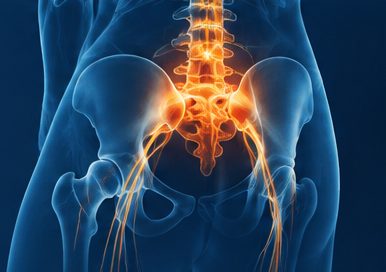
What's inside
Part 1: Why it keeps coming back
- Opening You've Fixed It 50 Times The stuck, relief, return loop, and the question that breaks it.
- 1 Your SI Joint Is Part of a System Why the place you feel it is not where the pattern is organized.
- 2 Relief Is Not the Same as Learning The difference between a change today and a change that lasts.
- 3 The Brain Doesn't Control a Joint in Isolation The loop your brain runs to hold your pelvis.
- 4 The Ground Is Talking to Your Brain What your foot posture tells your brain on every step.
- 5 Your Eyes Change Where "Straight" Is Head tilt, screen habits and the head-tilt photo test.
- 6 Balance Is a Multisensory Problem Which source your brain leans on to stay upright.
Part 2: The method
- 7 Observe, Change, Retest The Posturepro method, how to measure, and a full worked example.
- 8 Why Your Adjustment Worked... Then Didn't What happens in the 23 hours after the session.
- 9 Stop Chasing the Tight Side What job the tight side is doing.
- 10 The 24-Hour Problem The 24-hour checklist: screen, standing leg, sitting, sleeping, car, phone, shoes.
- 11 Therapeutic Insoles: Support vs What Your Feet Report The foot test and the insole test.
- 12 Your SI Reset Strategy Every test and every step in one place.
Part 3: Your plan
- 13 Find Your Pattern The pattern card and the four patterns: foot-led, eye-led, balance-led and mixed.
- 14 Your 28-Day Reset Plan Day by day, with retest days, three worked examples and a printable tracker.
- Printable What to Do When It Comes Back A one-page printable plan for flare-ups.
- Final Chapter Stop Asking "What Do I Stretch?"
Printables: Baseline and Retest Worksheet. Observation and Experiment Reference. 28-Day Tracker.
83 pages. Instant PDF download.
Take a look inside
This Isn’t Just Another Book About SI Joint Pain.
It’s a practical guide you can follow at home to investigate your own pattern.

Find Your Pattern
Follow simple, step-by-step assessments to identify which sensory systems may be contributing to your recurring pain.
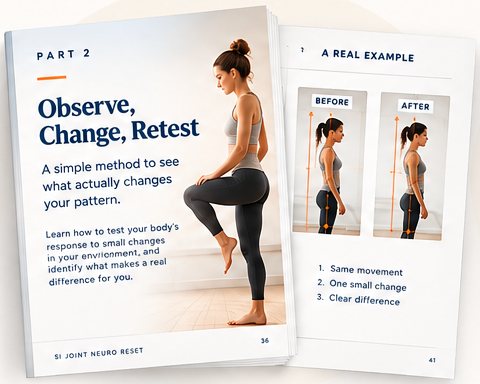
Test What Changes Your Pattern
Use the 3-step Observe, Change, Retest method with clear examples and instructions you can do at home.
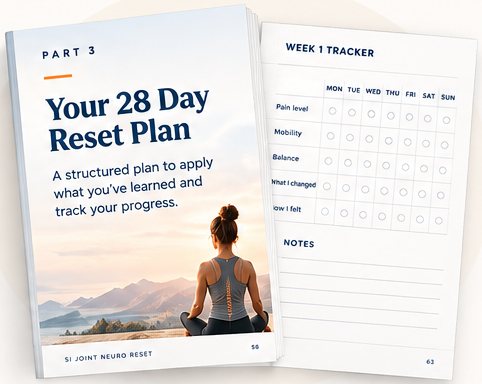
Follow the 28-Day Plan
Get a clear daily plan with a tracker, so you can apply what you’ve learned, stay consistent, and see what changes week by week.
Frequently asked questions
Why does my SI joint keep going out?
Your SI joint is where you feel the problem, but your nervous system decides how your pelvis is held, based on what it reads all day: how your feet meet the ground, where your eyes and head sit, and how stable you feel. If that information keeps telling your brain the same thing, it keeps rebuilding the same pattern. SI Joint Neuro Reset shows you how to test which of those is driving yours.
Why didn't my adjustment hold?
An adjustment can change how your pelvis is held for a while. Then you go back to the same shoes, the same screen and the same standing habits, and your nervous system rebuilds the pattern that matches them. The book explains this in Chapter 8 and shows you what to change between appointments.
Can my feet affect my SI joint?
Yes, they can. Your feet are one of the main sources of information your brain uses to organize your standing posture. When your weight lands unevenly, rolls inward or sits back on one heel, your pelvis adjusts to match. The book's foot test, filmed from behind with your phone, shows whether a change under your foot changes your numbers.
Is SI Joint Neuro Reset an exercise program?
No. It is a testing method. You take simple measurements, change one thing your brain is reading, and measure again, so you learn what actually changes your body. A 28-day plan then helps you repeat what worked.
What do I do in the 28-day plan?
In week 1 you take your numbers and find your pattern. In weeks 2 to 4 you repeat what changed your numbers, change daily habits such as screen position, standing leg and shoes, and retest every seventh day. A printable tracker keeps the record.
Do I need the Posturepro Therapeutic Insoles?
No. The book includes an optional insole test that shows whether changing what your feet report changes your numbers. If it does, the insoles let that continue in your everyday shoes.
Can I use it while I see a chiropractor, physiotherapist or osteopath?
Yes. You can use it between appointments, and your retest numbers give your practitioner useful information.
How long do the tests take?
About ten minutes for a full baseline. Most days in the 28-day plan take a few minutes.
Why Your SI Joint Pain Keeps Coming Back (Ebook)
Your SI joint gets adjusted, feels free for a few days, then gets stuck again on the same side. SI Joint Neuro Reset shows you why it keeps coming back and how to find the pattern your nervous system keeps rebuilding. Simple home tests, a Find Your Pattern card and a 28-day reset plan show you what actually changes your body.